
Dry Deck Interactive Plaza Fountains: Drainage Grates, Subterranean Reservoirs & Hydraulic Design
Discover the architectural engineering principles behind kid-friendly, walkable dry deck plaza fountains: hidden balance tanks, anti-slip stainless grates, and water recycling loops.
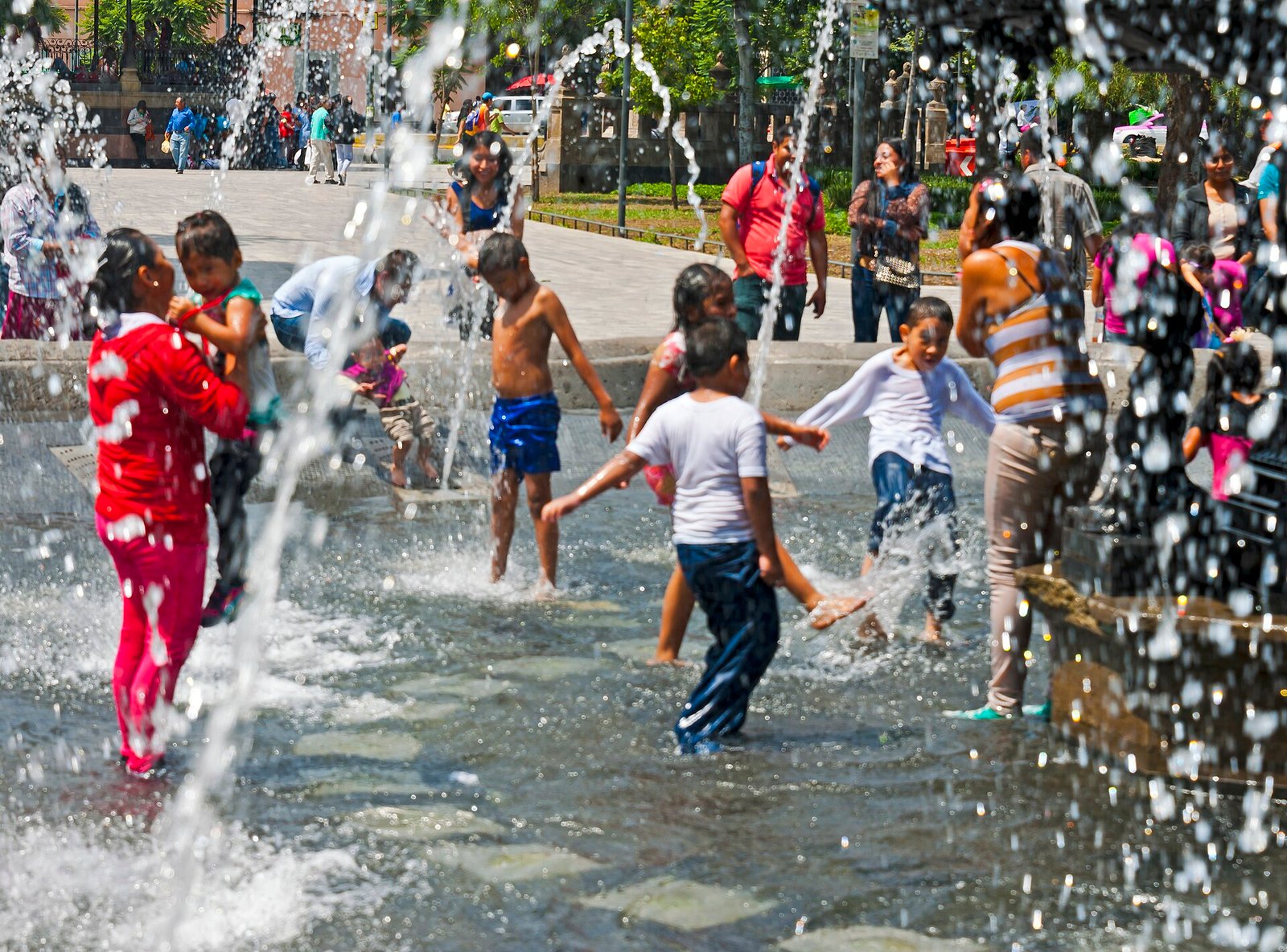
Dual-Chamber Dry Deck Module Engineering
The core of a modern dry deck installation is the cast AISI 304L/316L stainless steel module recessed into the concrete slab. Each module incorporates a centered hydraulic nozzle, an integrated circular IP68 LED luminaire, and high-flow perimeter drainage slots. Dual-chamber designs isolate the pressurized supply pipe from the gravity return chamber, ensuring that returning pool water never creates backpressure on the projecting water jet.
Pedestrian Safety, Heel-Proof Grating, and Slip Resistance
Because children and adults walk directly across the active fountain, grating design must satisfy rigorous safety standards. Grate aperture widths must not exceed 8mm to prevent barefoot toe entrapment or high-heel snagging (ADA heel-proof standard). Surface grating finishes undergo precision electro-polishing and laser-etched cross-hatching to achieve an R11 or R12 slip-resistance rating under wet barefoot conditions.
Subterranean Reservoir Sizing & Gravity Runoff Slope Calculation
Plaza pavers must slope gently toward the drainage channels with a minimum 1.5% to 2% gradient to prevent surface puddling and slip hazards. The underground balance reservoir volume is sized to contain 100% of the active water in circulation plus a safety surge volume: Volume = (Total Pump Flow Rate in LPM × 3 to 5 minutes) + Plaza Surface Retention Volume. High-capacity gravity trench drains prevent surface water from spreading toward adjacent retail store entrances.
Public Health & Microbiological Water Disinfection
Because interactive fountains allow direct bodily contact and accidental ingestion, microbiological safety is paramount. Systems utilize rapid dual-stage silica sand filtration (complete turnover every 30 minutes), continuous low-dose sodium hypochlorite chlorination, and high-output inline UV-C reactors capable of inactivating chlorine-resistant pathogens such as Cryptosporidium and Giardia.
Interactive Dry Deck Plaza vs Open Pool Fountain Specifications
| Engineering Parameter | Dry Deck Interactive Plaza | Traditional Open Basin Fountain |
|---|---|---|
| Surface Accessibility | 100% walkable & usable when turned off | Permanent open water obstacle |
| Drowning Hazard | Zero standing water (100% child-safe) | Requires barriers or lifeguard oversight |
| Drainage Mechanism | Heel-proof SS304 grates & gravity trenches | Perimeter overflow weirs & coping scum gutters |
| Water Turnover Rate | Every 20 to 30 minutes (High speed) | Every 2 to 4 hours (Standard pool) |
| Sanitization Standard | Potable-grade UV-C + Automated Chlorination | Standard algaecide & sand filtration |
| Nozzle Enclosure | IP68 recessed junction box with drainage sump | Exposed submerged manifold brackets |
Technical FAQs
Can vehicles drive over a dry deck fountain plaza?
Yes, if heavy-duty D400 or C250 load-rated ductile iron or thick-gauge 316L stainless steel grates and reinforced concrete support collars are specified during civil engineering.
How is street debris and trash kept out of the subterranean pumps?
Each dry deck module features a removable stainless steel mesh debris basket. Runoff drains also pass through secondary coarse strainer baskets in the underground plant room before reaching the sand filters.
What nozzle type is best suited for children's interactive splash pads?
Smooth-column laminar jets and aerated foam jets are ideal because they produce soft, low-impact water streams that do not cause eye irritation or physical discomfort on impact.
How deep does the underground balance tank need to be?
Balance tanks are typically 1.8 to 2.5 meters deep to maintain adequate net positive suction head (NPSH) for the circulation pumps and permit easy maintenance access.
What is the recommended operating water pressure for dry deck jets?
Operating pressure typically ranges between 0.8 bar and 2.2 bar, producing jet heights between 1.0 meter and 3.5 meters.
Have a Fountain Project Requiring Expert Engineering?
Consult with Fludio's hydraulic engineers for complete DMX 512 choreography, pump sizing, and certified 304L stainless steel hardware.
Consult Our Engineering Team