
Fire-on-Water (Hydro-Pyro) Fountain Engineering: Pressurized Gas Flame Nozzles, Optical Safety Sensors & DMX Pyro-Sequencing
Discover fire-on-water (hydro-pyro) fountain engineering: pressurized gas flame nozzles, pilot ignition, optical UV flame scanners, and DMX show automation.
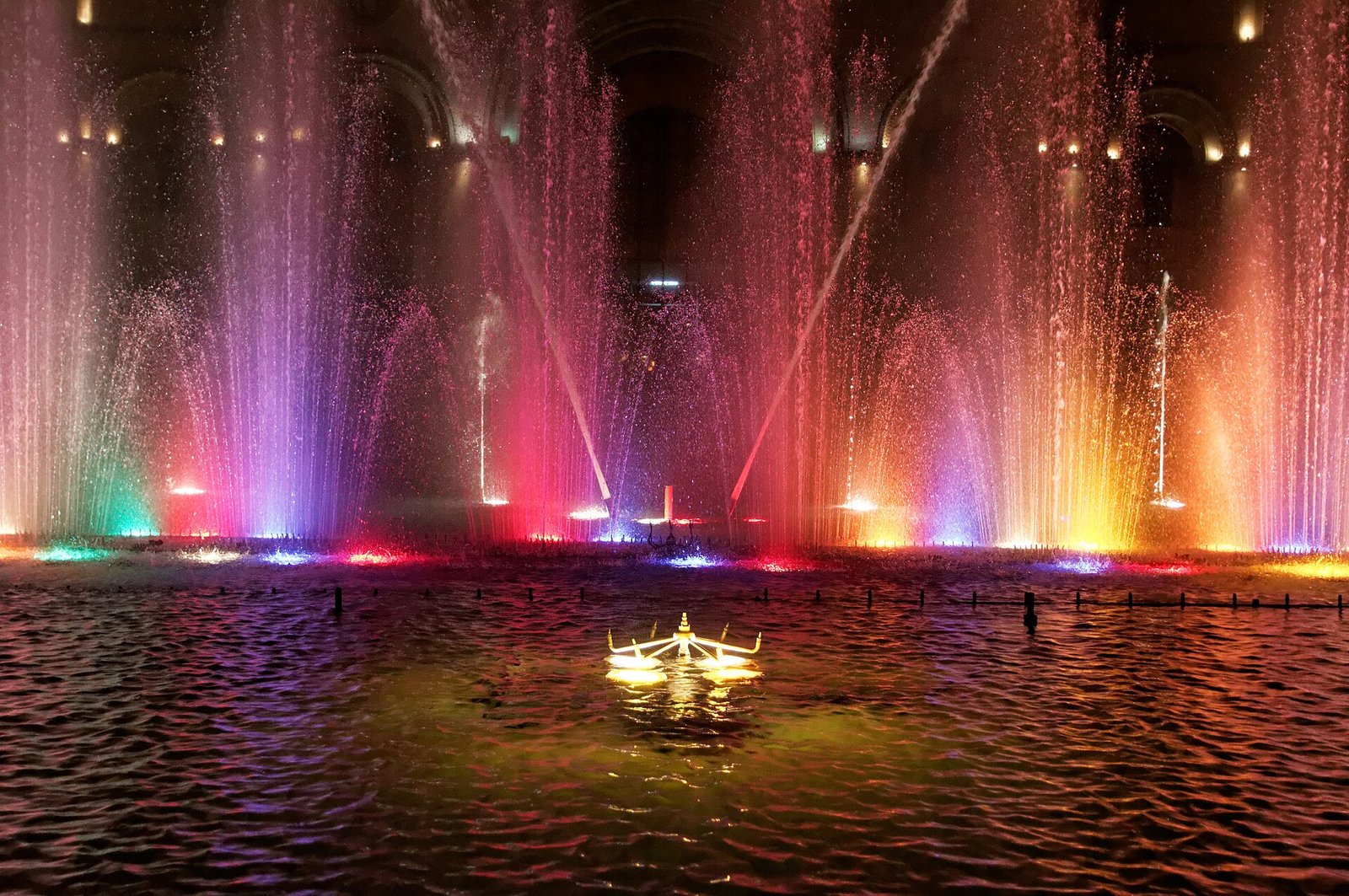
The Hydro-Pyro Phenomenon: Combining Elemental Opposites
In large-scale multimedia destination attractions (such as Dubai Festival City or Bellagio Las Vegas), static water shows no longer provide the visceral shock required to drive recurring night tourism. Hydro-pyro engineering introduces controlled bursts of real combustion into aquatic displays. The engineering challenge is immense: sustaining a 1,200°C hydrocarbon flame envelope in direct contact with hundreds of liters of falling water without quenching the pilot burner or flooding fuel lines. Fludio solves this using concentric dual-annulus nozzle heads, where an inner gas nozzle fires through a high-velocity laminar air-shroud that creates an aerodynamic dry micro-bubble within the surrounding water blast.
Fuel Systems: Pressurized Propane vs. Atomized Bio-Ethanol
Selecting the combustion medium depends on local safety regulations and installation scale. For outdoor lake spectacles, pressurized Liquid Petroleum Gas (LPG) or vaporized propane (operating at 3 to 6 bar) generates massive roaring fireballs measuring 3 to 8 meters in diameter with deep yellow-orange luminosity visible from 500 meters away. For indoor atrium theaters or eco-resorts with tighter smoke regulations, Fludio specifies high-pressure atomized bio-ethanol fluid systems, which burn cleanly with zero soot, zero odor, and immediate flame collapse upon solenoid shut-off.
Safety Architecture: SIL-3 Certified Fail-Safe Automation
Public safety is paramount in hydro-pyro engineering. Fludio's fire-control panels comply strictly with NFPA 160 (Standard for the Use of Flame Effects Before an Audience) and IEC 61508 SIL-3 safety protocols. Each burner station incorporates redundant normally-closed safety shut-off valves (SSOV) and dual high-speed optical ultraviolet (UV) flame scanners. If the pilot flame extinguishes or the optical scanner fails to detect primary flame ignition within 150 milliseconds of gas release, the safety controller instantly locks out the station, vents the gas manifold through an auxiliary purge stack, and halts fuel delivery.
DMX512-A & SMPTE Timecode Pyro Choreography
In a world-class musical fountain show, fire effects must hit musical beats with millisecond precision—firing on a dramatic drum crescendo or orchestral burst. Fludio hydro-pyro systems interface directly with the master DMX512-A and Art-Net choreography console via dedicated safety-interlocked pyrotechnic decoders. Each flame burner occupies 3 to 5 DMX channels controlling safety arming, pilot ignition, fireball height, and flame burst duration (programmable from 50 milliseconds up to 3.0 continuous seconds).
Hydro-Pyro Fuel Technologies & Engineering Performance Matrix
| Fuel Medium | Flame Burst Height | Luminosity & Color | Safety Distance | Best Architectural Fit |
|---|---|---|---|---|
| Vaporized Propane / LPG | 4.0 – 12.0 meters | Intense bright orange-yellow (high thermal output) | 15 – 25 meters | Monumental municipal lakes & theme parks |
| Natural Gas (Mains Piped) | 3.0 – 8.0 meters | Warm amber with blue core | 12 – 20 meters | Permanent waterfront amphitheaters & promenades |
| Atomized Bio-Ethanol | 2.0 – 5.0 meters | Clean yellow-orange (zero smoke/soot) | 8 – 12 meters | Luxury resort plazas, rooftop lounges & casinos |
| Submerged Gas Bubble Nozzle | 1.0 – 3.0 meters (on water surface) | Floating flame effect burning across water | 10 – 15 meters | Intimate resort reflection pools & VIP terraces |
Technical FAQs
Can the flame effect operate in heavy wind or rain?
Fludio hydro-pyro burners incorporate continuous high-energy 15 kV electronic plasma spark igniters that sustain combustion in moderate rain. However, anemometer interlocks automatically disable fire effects if sustained wind speeds exceed 20 km/h.
How is fuel supplied to burners mounted in the middle of a lake?
Fludio utilizes armored, flexible double-containment stainless steel braided hoses running along submerged HDPE anchor catenaries, equipped with automated nitrogen purge lines and pressure-drop leak detection.
What permits are required to install a fire-and-water fountain in India?
Installations require approval from the local Chief Fire Officer (CFO), Petroleum and Explosives Safety Organization (PESO) compliance for fuel storage, and compliance with NFPA 160 safety distances.
What is the fuel cost of operating a fire fountain show?
Because fire bursts are brief dynamic accents (lasting 0.1 to 0.5 seconds each), a standard 15-minute musical show firing 40 flame bursts consumes only 3 to 5 kg of LPG, costing under ₹400 per show.
Does Fludio provide on-site safety commissioning and operator training?
Yes. Fludio's certified automation and safety engineers execute complete on-site leak testing, flame calibration, emergency shutdown drills, and operator certification for every project.
Have a Fountain Project Requiring Expert Engineering?
Consult with Fludio's hydraulic engineers for complete DMX 512 choreography, pump sizing, and certified 304L stainless steel hardware.
Consult Our Engineering Team